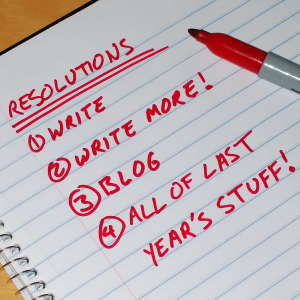
Sunday, June 22, 2014

Writer's Ramble: Making Time for Writing


This year at the Life, the Universe, and Everything symposium I had the chance to attend a kaffeeklatsch with Larry Corriea.  If you don’t know what that is, it’s a chance to sit down with an author in a small group and talk shop.  It’s a great opportunity to get to know a published author personally, and to ask questions.

One of the questions that I asked was, how do you balance your time and find time to write?  Larry’s answer was very reassuring to me, because he didn’t tell me anything that I didn’t already know. 

So, how do you make time to write?  Let me share with you what three things that have worked for me.

Find a time when you can write, uninterrupted
I’m an evening person, and I only need about 7 hours of sleep a night.  I put all my kids to bed by 9:30, so that gives me at least two and a half hours per night to write.  I’m not able to write every night.  Some nights I have less time and some nights I have more time.  But this is my time.

I find that I cannot write when other people are in the room, staring over my shoulder.  It’s too distracting.  I can’t write when someone has the TV on, or when someone is talking on the telephone in the same room, or when there is music in the background, or when a child is crying (which happens a lot in a family of five kids).

Night time is my time.  All the kids are in bed.  All the chores are done (most of them, at least).  My wife is in the other room with a mug of coco and Dr. Who on Netflix.  Now I can write.

So, are you a morning person or a night person?  Can you find space in your day when nobody is bothering you?  Can you find a place in your home free of distractions?

Make it a priority
Writing is going to be incompatible with your life.  Your biggest conflict will come from the people closest to you.  Your spouse.  Your children.  The friends that you hang out with.  Your parents, and your brothers and sisters. 

If you are married, or you have a serious someone in your life, you need to talk to them about your writing.  You need to let them know that writing is important to you.  You need to ask for their support.  This will mean hours of your time every day or so when you are NOT PAYING ATTENTION TO THEM. 

If you are a woman, you will struggle with the demands of being a mother, and you will be haunted with guilt that you should be paying attention to your children (particularly if you have young children).  And you will wrestle with guilt that you're neglecting the housework or your family.

My wife decided recently that she wanted to write.  In order to free up some of her time, we decided to put our youngest daughter into preschool.  This gave her three hours a day, for three days out of the week.  It made a huge difference.

The daily grind is always going to be there.  If you want to write, you’re going to have to make time for it.  You're going to have to tell yourself that your writing is important, and that for a few hours a day it has higher priority than anything else.  I think of my writing as work.  It's not a hobby and it's not some idle thing that I do to slack off.

Discipline yourself to do it.
When it comes to writing, you are going to be your own worst enemy.  You’ve blocked out the time, you’ve found a place where you aren’t going to be distracted.  You’ve gotten your spouse to run interference for you and keep the kids off your back.

And you spend the whole time on Facebook, or playing solitaire, or watching cat videos on You-Tube.

Some days you’re just not going to be in the mood.  Some days that X-Box calls to you like the siren’s song.  Sometimes you’d rather be out mountain-biking, or reading e-mail, or baking, or just getting out of the house.

I can’t count how many times I’ve sat down to write and I ended up playing video games or watching Netflix, instead. 

Sigh.

On the weekends I find it best if I take my laptop home from work and write on that, instead of using the workstation in my office.  I have too many distractions on my home PC, but the laptop only has work-stuff on it.  I can take the laptop and camp out in my dining room all day.  I’m alone, because if I see one of my children rummaging for food in the kitchen I give them a chore to do (If I let them, they’d spend the entire day eating and leaving a mess everywhere).  It works really well.

You need to motivate yourself.  You need to put your butt in your chair, and do it.  You need to resist all that other fun stuff.  Writing is hard to do.

Is this really what you want to do?
A few years back I decided that I wanted to be in a quartet.  I have a pretty good voice, and I was interested in singing.  I got a group of guys together and we practiced a few songs.  It was all religious stuff, and we sang on Sundays in front of our congregation.  We got lots of compliments.  We were good. 

And then I stopped doing it.

Why?  Well, honestly, you’ve only got so much time and you simply can’t do it all.  It wasn’t that I didn’t enjoy it.  It wasn’t that I wasn’t good at it.  It just didn’t fit into my life, so it had to go.

I can name a host of other talents that I’ve had to let go of, for similar reasons.  I haven’t picked up a guitar in 4 years.  I used to draw, but I gave that up, too.  I used to program video games, but not any more.  I can probably name five other things that I would dearly love to get into, but I never will.

Is it bad that I have all these talents, and they’re going to waste?  Certainly not.

My rambling has a point: writing is something that you choose to do.  Whether or not it’s something that YOU do is up to you.

Thursday, May 15, 2014

Writer's Ramble: Writing a Satisfying Ending


My wife picked up a collection of short stories by H. P. Lovecraft, and came across a story she really liked.   Lovecraft did a really good job, until the story came to an abrupt end when—from out of nowhere—a lightning bolt burns down the house and everything inside it, including the main character.
I did not shriek or move, but merely shut my eyes. A moment later came the titanic thunderbolt of thunderbolts; blasting that accursed house of unutterable secrets and bringing the oblivion which alone saved my mind.

—H. P. Lovecraft, The Picture in the House

My wife’s reaction was classic: “…uh, seriously?”

The ending to your story will make it or break it for your readers.  You need a good payoff, but how do you do that?  This question doesn’t have an easy answer, and as you can see from Lovecraft’s example above, it’s a problem that has plagued writers since mankind first put pen to paper.

Fortunately, you have tools.  

1. Do you know your story from your villain’s point of view?
I could write an entire blog on this particular point; it is really that important.  If you don’t explore your story from the villain’s POV, your readers will complain that they can’t figure out what your villain is after.  Your story will never feel like it’s going anywhere, and you will never come up with a conclusion that feels satisfying.

Most plot-based stories take on one of two forms.  The first form is reactive, where the protagonist is thrown into the action through an inciting event, and they must stop the villain from accomplishing their dastardly plans.  Think Raiders of the Lost Ark.  The Nazis are trying to find the Israelite’s lost Ark of the Covenant.  Hitler sees the Ark as an ultimate weapon to help him win the war.  Indiana Jones must stop the Nazis before they are successful and the United States is defeated.

The second plot-type is proactive, where the hero sees a challenge and comes up with a plan to overcome it.  Think The Guns of Navarone, where a team of spies must destroy a Nazi naval gun battery so that a group of British destroyers can rescue 2,000 British soldiers that are marooned.

Most plot-based stories have a villain or a group of villains.  You need to know what your villain’s motives are.  If your story is reactive, then you need to know how your villain plans to achieve their ends.  If your plot is proactive, then you need to know what resources the villain has and how the villain can respond to threats.  

As an exercise, sit down and free-write for 20 minutes, putting yourself in your villain’s shoes.  Why are they committed to their cause, what do they want to accomplish, and how do they plan on achieving their goals? 

2. How has the story affected your main character?  
An inner struggle is not essential, but it can add depth to your story and your readers will form a stronger bond with your characters.  

As an exercise, free-write for 20 minutes and answer the following questions:
  1. Why did the story matter, personally, to the main character?  How is the conflict meaningful to the main character?
  2. How has the main character grown or changed?  Has the hero had to re-think the way they look at things?  Has the hero found peace and understanding?  Or has the hero become more deeply connected to their cause? 
  3. What has the hero had to sacrifice for their cause?  How has that sacrifice paid off?
  4. What circumstances made this story emotionally difficult for your main character?  
  5. What has the hero gained, either personally/inwardly, or outwardly?
  6. What has the hero lost?
  7. What has the hero resolved to do from now on?
  8. What has the hero resolved to never do again?

3. Brainstorm
You’re not done free-writing yet.  

Make a list of all your loose ends.  Write down the points of your main plot.  Write down all your B-plots and side stories.  Now brainstorm 10 different ways that your plot could go.  

Some of your ideas will be good and some will stink, but that’s part of the process.  Don’t stop when you’ve found a good idea  You really need more than one for this to work.  Keep going, keep thinking up new ideas!  If you get 10 ideas and they all stink, then extend your list to 20 ideas.  You will eventually come up with something.

Now pick two or three good ideas, and free-write the endings at a high level.

Conclusion
There’s a lot of brainstorming and free-writing involved in this process.  In general, the best endings feel logically inevitable yet are still a surprise.  

I’ve used all three of these techniques to bring my stories together.  The first technique is particularly useful when I’ve been stuck in the middle of a story.  Technique 2 is particularly useful after I’ve finished the first draft of the story and I want to go back and add character depth.  Finally, I use technique 3 throughout the story development process.

Wednesday, February 12, 2014

Why Write?

This month, in honor of Valentine's day my writer's group decided to write about why we love writing.  It's an appropriate question really, and one that every writer ought to ask themselves: why do I do this?

Fulfilling a Childhood Dream
I don’t know when I decided that I want to be a writer.  It happened sometime in 1985 or 1986 during my senior year, between reading Lord of the Rings, and The Sword of Shannara.  I looked in vain for any other type of fantasy worth reading but nothing captured my imagination quite as much as Tolkien or Terry Brooks.

And somewhere along the line I figured, how hard could it be?

I knew it was going to be a long time before I could get deep into writing.  I tried while I was in college, but college pretty much takes over your life.  I had no spare time.  Also, I noticed that my writing lacked authenticity.  It lacked purpose or passion.  I knew then that I would have to live life, and gain experience through the choices that I made and the trials that I experienced.  I was more or less compelled to lay it aside.

I wouldn’t pick it up again for fifteen years.

The Passion
When I did pick it up, I was looking for something entirely new to do with my time.  I’d grown bored and restless.  I’d watched the years pass by, the good and the bad, and I’d begun to wish I had something more to show for it.

This is probably the fundamental reason why I write.  It’s that creative passion, that yearns to be sated.

I tell everyone that wants to learn something new that passion will take them a lot farther than talent.  Don’t worry if your talent is weak.  Passion will help it grow.  Just stick with it.  Have patience.

Developing a Talent
I asked my wife what she thought about me picking up writing.  I was beginning to have doubts, and I couldn’t convince myself that this was worthwhile.  She told me that writing was a talent, and that any effort spent developing your talents was worthwhile.  We’re both LDS, and we’re deeply religious.  Developing talents is something you hear in a lot of LDS Sunday church meetings, so the message hit hard.

The Community
About a year after I got into writing I joined the League of Utah Writers, and found a writer’s group.  We started a group blog, called The Writer's Ramble.   I've been to lots of writing conventions.  My favorite one starts tommorrow in Provo, Utah.  It's called Life the Universe and Everything.

This has been an amazing experience for me.  It’s awesome meeting other people who like doing what I do.  I’ve learned so much from other writers, and the emotional support I get from them has helped me stick with it.  As an added side benefit I’ve made a lot of friends, which is nice because I’m kind of an introvert and a bit of a curmudgeon.

Social Media
Social media is like planting a garden. You have to spend time with it.  You have to put effort into it.  And the real satisfaction is watching it grow.  My wife and I have been blogging now for a couple of years, and it’s been fun watching the hits climb.  It’s been a challenge to find our voice and to come up with content that continually brings visitors back.

Benefits to Family
All of the things that I’ve learned have started to benefit the rest of my family, as they try and improve their own talents.  My wife wants to write a non-fiction book.  She’s started working on a blog to capture an audience, and I’ve been able to help set that up and we’re watching it grow.  My daughter wants to be a graphic novelist, and I’ve been able to talk to her about story concept, about audience, about plot, all kinds of things.

I Keep Getting Better
This hasn’t been like the other talents I’ve tried (like music—ugh).  Or singing (I’ll never be Steve Perry or Lou Gramm).  When it comes to writing, I’m actually getting better.  I’ve taken honorable mention two out of three times with Writers of the Future (the third time I disqualified myself by putting my name on the manuscript).  I’ve placed in a handful of contests that I’ve entered, as well.

I’ve improved in many ways.  I have a better understanding of character voice, I have a better understanding of story structure, I no longer say things twice, and I no longer confuse the reader by saying things that contradict each other.

Sometimes it’s frustrating.  I’ve been working on the same novel since 2010.  Every year I tell myself, “Next year I’ll be finished with book one.”  “Next year I’ll be ready to pitch to an agent.”  But I keep getting better.  Then I go and read in my writer’s journal and I can see how much I improve.  And I look at my wife and my children who are beginning to benefit from the things that I’ve learned.

And It’s all worth it.

Saturday, January 18, 2014

Nokia Lumia 1020 on T-Mobile

Over the Christmas holidays I bought the Nokia Lumia 1020 and signed up for T-Mobile.  I’ve been using my phone constantly for about two months and I’m fairly satisfied with the experience, overall.  Every now and then I like to post a tech article on my blog, so I decided to make a list of everything that’s gone right and everything I wish I could change.

The T-Mobile experience
Most people don’t know that you can run any AT&T phone on T-Mobile.  I know this because I did software development with cell phones in my last two jobs.  I was given a bunch of phones, and a bunch of pre-paid SIM cards from T-Mobile and AT&T (or Cingular as we called it back then).  As long as your phone uses GSM, you can switch between the two networks without a problem.  I had no problem activating my phone.  The kids running the T-Mobile booth at the mall were a little skeptical, but everything turned on just fine.

So, why would you want to pick T-Mobile over AT&T?

Well, it’s cheaper for one thing.  I rarely get phone calls, so I don’t like being locked into a contract and having to pay through the nose for a service that I almost never use—however, I still need to keep in touch with friends and family.

So, I went shopping for a basic plan.  I looked at both AT&T and Verizon first, because they do have the widest coverage.  But they were all too expensive, and they were geared toward people that are always texting and talking on their phones.  Really, all I need is something to stay connected.  

Second, T-Mobile’s data rates more than satisfy the minimum level of service for broadband.  I get 15 Mbps download, and a little under 2 Mbps upload.  That might sound a little slow compared to the other networks, but two years ago this is what Comcast was offering for its basic cable service.  Think about that for a moment.  Wireless tech has caught up with cable broadband.  

15 Mbps is more than fast enough to stream music.  Pandora requires 150 Kbps.  That is 1/100th the speed.  Netflix requires 3 Mbps for DVD quality, 5 Mbps for HD quality, and 7 Mbps for Super HD.  My phone can only display DVD quality, so 3 Mbps is all I really need.

The final reason for picking T-Mobile was that I realized I can get Wi-Fi everywhere I go.  My house has Wi-Fi.  My work has Wi-Fi.  Most restaurants have free Wi-Fi.  The mall has free Wi-Fi.  Heck, even my church has Wi-Fi.  The only time I really need T-Moble’s data service is when I’m on the road and my phone needs to download real-time traffic updates, or when I’m at the supermarket and want to look something up.

As an added bonus, because I bought my phone unlocked I can turn on internet connection sharing.  This means that I can use my phone as a Wi-Fi hotspot.  This comes in handy when I’m traveling and I need to use my laptop, but I can’t get Wi-Fi.

My only real hiccup came not from T-Mobile, but from Windows Phone.  I'd bought the phone off of Amazon from an international dealer.  The phone came out of the box speaking Taiwanese.  Fortunately, one of the first questions the phone asks you when you start up is what language you speak.

If you want to, you can buy your phone directly from AT&T.  Call them up, and ask them politely to unlock the phone.  If they get curious, tell them you want to be able to travel overseas and you can't use a locked phone on Europe's networks.  You'd like to travel to Europe, wouldn't you?

So, overall, would I describe my experience with T-Mobile as unsatisfactory, satisfactory, or very satisfactory?

I’d describe it as tremendously splendid.

The Windows Phone Experience
I worked at Microsoft in the Windows Mobile division way back in the day, back when Windows Mobile 5 was just coming out (those were halcyon days, before Apple came and stole Microsoft’s lunch).  It was 2006, and the biggest complaint was that none of the apps seemed to work together.  I could take a picture, but getting that picture off the phone and shared on Facebook was a hassle.  I had contact info in Outlook, but getting turn by turn directions on a map-app hadn’t even been invented yet.

All that is different now.  Everything is tightly integrated.  I can take a photo of my patio furniture after it snows and share it straight to Facebook.  I can look up someone in my list of contacts, and with one tap I can get turn-by-turn directions to their house (perfect for when I have to pick up one of my kids at a friend’s house).  And then while I’m out running around, I can do a Bing search and find all the nearby fast food restaurants, or gas stations, or the nearest Target.  If I don’t want to use the GPS navigation to get there, I can turn on HERE City Lens and use my phone’s camera as a homing device to point me in the right direction.

The world owes Apple a debt of gratitude for inventing the integrated app store.  You have one place to search for all apps, then install the ones that you like.  In the Windows Phone app store you have reviews and screenshots.  The store also keeps track of app updates, and lets you know when you need to download something again.  If I see two apps that have four stars, and one app has 23 reviews but the other app has 10,000 reviews, it’s easy to see which one people prefer.

There is also an app called App Social.  It works kind of like Twitter, and it allows you to find out what people are using.  I’ve used it a little, but I don’t want to spend time building up yet another social network when the app store for Windows Phone shows me everything.

As for the Nokia Lumia 1020, itself, I haven’t been disappointed.  It has never felt sluggish or un-responsive.  The phone is thicker than most smartphones, but that shouldn’t bother anyone because you really ought to get a protective case and that will add at least an eighth of an inch (4mm) to your phone’s girth.

I like the AMOLED display.  It’s perfect for watching movies no matter how you hold it, and I’ve never, ever had trouble using it outdoors (unlike my son’s iPod 5, which is unreadable in direct sunlight).

The camera is really, really nice, and it makes all the difference when showing off your phone.  Most Windows Phone conversations go like this:

“Oh, you have a Microsoft phone.  What do you think?”

“It’s nice.”

“Heh.  Cool.”

For me, the conversations go like this:

“Oh, you have a Microsoft phone, what do you think?”

“It’s nice.  The camera is awesome.”  I flip the phone over, and they can see the beefy camera lens.

“Ooooo, let me try!”

Do you see the difference?  I’ll never win a bragging war in screen size or pixel density or raw processing horsepower, but people are regularly impressed when I start taking pictures.

It’s a good feeling.

Top Ten things I use the most

10. Surfing the web.  I go to NBC News for the news.  I also go to The Verge, re/code, and C-Net.  Honestly, though, I don’t do a whole lot of web browsing on my phone.  A computer screen is much easier to read.

9. Wikipedia.  This is awesome if you want to do some quick fact-checking.  I have the app pinned to my start page.

8. Casual games.  I’ve read all my email.  Nothing is happening on Facebook.   George Takei is on another social rant (blah-blah, blah-blah…oh, my!!!), and my nieces have filled up my timeline with duck-faced selfies.  For such times, I have a plethora of casual games.  My favorite three are Spades, Hearts, and Othello.  I found an Othello game that will just clobber my butt.   I’d love it if I could find 7-Card Stud.

7. Facebook.  In the words of Stan Lee, “‘Nuff said.”  I use the Facebook app, not the webpage.

6. Email.  I can manage different email accounts.  Setting up a connection to your email couldn’t be easier.  You just give your email address and your password, and let the smartphone figure out all the settings.

5. Texting.  My extended family does a lot of texting, so now it’s easier to keep in touch.  My phone even does voice recognition, so I can dictate.  It works best for short sentences.

4. Music.  I am just getting into music on my smartphone.  Microsoft worked out a deal with Pandora so that Windows Phone users don’t get any commercials.  Very cool.  You can also get Nokia MixRadio, which is very nice, and 100% free.  With Pandora I find that I get the best experience over Wi-Fi.  I also use a Bluetooth headset.

3. Bing music search.  This is so cool.  I listen to the radio a lot, and I’m always looking for something different.  I tap the search icon (the magnifying glass icon), which opens up Bing.  Then I tap the music note icon, and my phone listens to whatever is playing.  After a couple of seconds it pops up the artist and title of the song.  It even keeps a history of all the stuff I’ve searched for, so I can go through it later and update my music collection.

2. GPS and maps, with Bing search.  I use this everywhere I go.  I use it to check freeway traffic when I’m going to work or coming home.  When I’m out running errands, I use it to search for the closest Target, or Staples, or Home Depot.  When I want to grab a quick lunch, it will find me someplace to eat.  When I have to pick up one of my kids at a friend’s house and the directions are horrid, it takes me straight to their front door.  If my wife and I have a date at that fancy restaurant across town and I can’t remember how to get there, all I do is look it up.

1. The camera.  I bought this phone because I wanted a camera, and it’s been awesome.  It has macro-focus and zoom capabilities that will best any point and shoot camera for under $200.  Back when digital cameras were just becoming popular (around 2002), a friend told me to get a camera that’s small.  Why?  Because if it’s small, then you’ll take it with you, and if you have it with you then you’ll take more pictures.

Nokia invested hard in making the camera experience superior on their phones, and they did a superior job.  The 41 megapixel camera means I can zoom in to 2.5X and I still have a 5 megapixel image.  It has a macro focus setting that allows me to get 4 inches away from my subject.  With the digital zoom I can get down to an area just over two inches wide.  It has a Xeon flash and an LED flash, too.

And there are tons of camera apps.  My favorite is Nokia Re-focus.  This app takes a bunch of pictures at various focal settings, and then it allows you to change which object you’re focused on.  Nokia smart-cam allows you to pick the best shot, remove moving objects in the background, and do a bunch of other photo enhancements.  And then there’s Nokia Glam Me, for all those duck-faced selfies you want to take.

Things that I thought would bother me, but don’t
The display is only 768x1280.  There is only one reason I think having a retina-quality display (300dpi or greater) is useful, and that’s for reading e-books.  After reading one e-book on my smartphone I don’t think I’ll ever do that again.  If I wanted to get serious about reading e-books, I’d get something with a 10-inch high-res display.

Thick and clunky profile.  Let’s face it, this phone is not slim.  The camera sticks way out the back, and even without the camera, this phone would be still thicker than most of the older Android phones.  However, I bought this phone because of the camera, and for that reason alone it’s perfect.

Also, I never planned on buying a smartphone without getting a protective case.  I’ve seen people sporting cases that are a half-inch thick.  A friend of mine has an iPhone with an Otter-box, and it’s huge.

You want to get a case, no matter what kind of smartphone you get.  People drop their phones all the time.  I tried using my son’s iPod 5 before I bought my Lumia 1020, and I kept dropping it.  I’m impressed that Apple and Samsung can make such thin and tiny devices, but there comes a point when it’s too small and too light.

I got a really nice case by Speck, from Amazon.  The camera lens protrudes through a hole in the back, but the case's protective thickness smooths out the 1020’s profile.  Now it’s easy to grip, it doesn’t slide around when I set it down, it doesn’t slip out of my pocket accidentally—and if I drop it I’m not suddenly out $600 to buya new phone.

It’s perfect.

The App Store.  I’ll be honest, the app store surprised me.  I found a ton of GPS apps, all of which are better in some way than HERE Drive+.  I found a Wikipedia app that just rocks.  I got a flashlight app, a dictionary app, an app for my bank account, and an app to take notes that will do voice dictation.  I even got an app that uses Google maps to show what the traffic on the freeway is like.  There are only two apps I wish I could get, but neither of them are something I really need.  There is no iHeart Radio app (BOOOO!), and I can’t get a decent Poker app.

I’ll be honest, there aren’t as many apps as you can find for Android and Apple.  I get annoyed when I go to a website and they say they have an app, but I can’t get it for Windows Phone.

But all the really cool apps are there.  Vine.   Pinterest.  Facebook.  Netflix.  Wikipedia.  Instagram.  WhatsApp.

You can’t find accessories.  This is true, but it’s also a lie.  You just have to know where to look.

I won’t deceive you.  There is a tremendous community (especially in the US) around Apple and Android.  Just walking through a shopping mall I’ll pass kiosk after kiosk of people hawking phone covers, screen protectors, Bluetooth gadgets.  You can get anything if you have an Apple device.  You can get nearly anything if you have a more recent Samsung device.

If you want something for your windows device you still have lots of choices, but you have to know where to go.  If you want to get up and go to a brick and mortar store then your best bet is your local Microsoft store.   I live in Salt Lake City, and they have a really nice one downtown, at City Creek Center.  It’s not as huge as the Apple store (which is just down the promenade), but there is plenty of stuff to see and it’s always busy in there.

Most people don’t have a Microsoft store near them, so your best bet is Amazon.  You can get anything on Amazon.  The next time I have some spending money I’ll go there and get a dashboard mount for my car.

I also got my protective case on Amazon.  A friend of mine has an iPhone 5S with a really nice case, made by Speck.  He pulled it out of his pocket and tossed it across a hardwood floor.  After I recovered from my initial shock I went and picked it up for him.  Not a single crack or scratch.  So, now I have a nice case by Speck.

Gripes 
Here are my gripes, in order of “irked-ness”, for lack of a better word.

Drive+.  I have a love-hate thing with Drive+.  This is the one area that I wish Nokia and Microsoft would get together and tighten things up.

  1. Why can’t I tap a street corner and have a menu pop up with an option that says “Drive to here”?
  2. When I save a location to my favorites, why can’t I give the location a name?
  3. Show bigger fonts and wider streets so I can tell at a glance where I’m going while I’m driving.  I can’t take my eyes off the road long enough to read the tiny, tiny text.
  4. Why won’t it show me alternate routes and let me pick?  There are probably five good ways I can get to and from work.  It would be cool if it would flag some routes as green and others yellow or red based on traffic conditions.  I want the app to give me some feedback so I know why it picked the route that it did.

There are a ton of turn-by-turn apps for Windows Phone.  I use one called CoPilot GPS.  It addresses a lot of my concerns, but the turn-by-turn directions aren’t anywhere near as good as Drive+.

The people app.  It’s not a “Contacts” app any more, it’s now the “People” app.  I can get used to that, but why did it have to import all my Facebook contacts?  Facebook is great for keeping in touch with people I haven’t seen in 30 years, but I don’t need their info on my phone.  Facebook is also great for following people like local authors and musicians, but again, I don’t want these people in my contact list.  And then there’s all the younger relatives on Facebook that I don’t want to un-friend but I do want to un-follow because the clutter my timeline with banal selfies and teen-age melodrama.  I don’t want those people in my contact list, either.  Is it too much to ask to have an “Exclude this person” feature?

The camera apps don’t use flash.  The main camera app uses flash and it takes great pictures.  So why then do none of the add-on camera apps (and there are a ton) use the flash?  If you’re in a low-light area then you pretty much need to use the main camera app.  Nokia Smart Cam and Nokia Refocus don’t work as well.

The compass.  For some reason my apps keep complaining that the compass needs to be calibrated.  “Move your phone in a figure 8 pattern,” the message says.  I finally found a diagram that showed an infinity pattern—not an 8.  Geez, why didn’t you just show me a picture…

The bezel could be thinner and the display larger.  When you put this phone side by side with a Galaxy S4, you can see what a difference a thin bezel makes.  It would be really cool if they made it 1/8th of an inch larger all around.  My biggest complaint with ALL smartphones in general is the tiny tiny screen.  The first phone I’ve seen to really address this problem is the Galaxy S4.

No SD card slot.  Seriously?  Why?  Ugh.

No NFC.  To get NFC I need to buy a plastic cover that snaps over the back.  The cover doesn’t offer any kind of protection, so it seems like a waste.  Nokia says that it didn’t want to add NFC because it would make the phone thicker.  What?  With the camera lens, this phone is already—by far—the thickest smartphone on the market.  Maybe NFC would have made the main body thicker but I don’t see how that would make a difference with the camera lens bulging out the back.  Honestly, though, I haven’t needed to use NFC.  So, whatever.

I can’t lay my phone down flat.  Even with the nice grippy-case from Speck, my phone still slides around when I set it down.  This is because of the camera lens.  Just a nit-picky thing, but it’s a trade-off.  I want the camera, so I just have to be careful where I set my smartphone down.

Top three smartphone fails
Let’s talk about some things that a smartphone just sucks at.  These are problems that I would have if I’d bought any smartphone.

The e-reader.  Can I just say that using your phone as an e-reader is a lame idea?  The screen is just too small.  You can only see a FOURTH of what you could see if you were holding an actual paperback.  I read The Hound of the Baskervilles.  I was constantly flipping pages, and the text was too small.  There’s something about the way you can just thumb through a paperback and browse that I’ve never been able to do with an e-reader.

My recommendation: get a tablet, or a netbook, or a dedicated e-reader.  Get something with a 10-inch, high-resolution screen (1920x1080).  Also, get something that can prop itself up and won’t fall over when you tap the screen.

Watching TV or movies.  Netflix works great, but watching movies on your smartphone only makes sense if you can’t get a bigger device.  The screen is too small to see what’s going on when there’s a lot of action.  The speakers are just too tinny to hear what’s going on if there’s a lot of noise.  On top of all that, you have to hold the thing in your hands or find some way to prop it up.  Using a dedicated speaker or a good-quality Bluetooth headset helps a little, but the only time I find TV and movies enjoyable is if I’m doing something else and I just want the TV on for noise.

My recommendation: anything with a 10-inch screen that can stand up on its own, and won’t fall over when you tap the screen.  My wife watches Netflix all the time on my netbook.

Serious gaming.  This one kind of goes without saying.  I’ve tried a bunch of games on my smartphone.  I downloaded a racing game, but I could never get the hang of it.  I downloaded Halo: SA Lite.  It was really cool, but I could never get into it.

Let’s face it, gaming on a smartphone is something you do to fill time—and only after you’ve read all your emails, and checked Facebook for the eleventh time.  Casual gaming on a smartphone is great.  I like card games like Hearts and Spades.  I like Mahjong Solitaire, and Othello, and Cut the Rope.  Angry Birds is great—but again, the really small screen makes it a little harder to play   I noticed this even on my son's iPod 5.

My recommendation: if you’re seriously into gaming, use a PC, an X-Box, or a Playstation.   At the very least, get a tablet.

Conclusion
Owning a Windows phone is a little lonely.  I feel like the little brother that no one wants to play with.  I feel like I’m at this super-cool party with great music and great decorations and great food, but no one is there.

That is slowly changing.

First of all, there always has been, and always will be a ton of interest around Microsoft.  I’ve never been to a Microsoft store that wasn’t crowded or at least a little busy.  Last night I was at a shopping mall in Murray, Utah.  My wife and I were walking around as everyone was closing up.  As we passed the Microsoft store (it’s more of a Microsoft kiosk, really), they were still helping people.

An article on C-Net shows that Microsoft and Nokia had strong sales for Q4 of 2013.  Windows Phone has consistently grown over the last year.  It is now the third largest OS, pretty much anywhere in the world.  In most places its market-share doubled throughout 2013.

Another article from GSM Arena has more good news.  There are 17 countries where Windows phone ships more than iPhone, and there are 14 countries where Windows Phone is the #2 OS.

So, I’m hopeful for the future.


Thursday, January 9, 2014

Making New Year's Resolutions Work for You

Do you include writing goals in your New Year’s resolutions?  How do you set meaningful goals and make yourself stick to them?  When has setting writing goals worked for you in the past?

I was never fond of New Year’s resolutions until I started writing.  What sold me on the idea was the day that I decided to get serious as a writer and get published.  It was sometime in 2009.  I set a goal to come up with three or four short stories, and submit them to Writers of the Future.  My first two stories, Counting Crows, and Alone got honorable mention.  I submitted a third, called The Witch of Westmoor Hall, but I think it got disqualified because I forgot to delete my name from the manuscript (oops).

The fourth short story got turned into my current novel, Mage’s Craft.

So I’ve had a lot of luck with New Year’s resolutions—at least with writing.  There are two tools that I’ve found that work really well for me: setting SMART goals, and keeping a journal.

SMART Goals
My first real training in goal-setting came when I started working at Microsoft.  We had to write SMART goals for our annual performance reviews.

  • Specific:  Target a specific area for improvement.
  • Measurable: You have to be able to track your progress.
  • Achievable: it has to be something that you can control and directly influence.
  • Relevant: It has to be something that will effect a meaningful change in your life.
  • Time-related: Set a date by which you will have something to show for your effort.

There are lots of variations on this idea.  You can read more about it in Wikipedia.

Here are the writing goals that I’ve set for myself for 2014:

  1. Write in my journal at least twice a week.  Talk more about what is going on in my life, as well as how my writing is going.  I used to do this a lot, but I fell out of the habit over the last two years.
  2. Spend two to three hours a week in the evening hanging out with my children.  I once heard Patrick Rothfuss comment on what he would do differently when he was writing Name of the Wind.  He said that he would spend more time with his friends and family instead of pushing them away.  He said that he was still trying to repair those relationships.  During the last two years I’ve been slave-driving myself to develop my novel more, and it’s taken a toll.
  3. Finish up the final draft of Mage’s Craft by the end of the year.  Before the end of the year I want to submit my manuscript to my beta-readers, and to the developmental editors at The Leading Edge.
  4. Finish planning Mage’s Word, the sequel to Mage’s Craft by the end of the year.  I want the villain’s motivation, and his plan of action.  I want a reason for the hero to become committed, a high-level description of his try-fail cycles, and the overall plot progression.  I want a theme that I can use to build the character arc.  I want a high-level description of how the story will end.  And I want enough brainstormed/outlined material to be able to sit down and start the first three chapters.

I’m at a point right now where if I really want to be a writer, I need some serious velocity.  If I want to sell, I need to build momentum with my readers, and to do that I need material.  Most writers who are successful will put out two or three novels per year.  This means that I have to really change how I do things.

Keep a Journal.
I keep a journal so that I can follow up on my goals.  This is where I record my progress, and where I review how well I’ve done at the end of the year.

Sometime in early 2010 I was looking back through my writing journal, and I found some of the original ideas for my short stories.  I’d been writing about the problems that I was having, and all the ideas that I was wrestling with.  And then I read where I’d made a decision that took my stories toward their final direction.  I later went on to win Honorable Mention.  As I read about my struggles and how I overcame them, I felt a sense of confidence and reassurance, and pride in something that I’d accomplished.  It was sublime and inspiring.  Almost transcendental.  There was something else, too.  For the first time I could see myself from two periods of time superimposed one over the other, and I could see the growth and transformation that had happened in between.

Does that make sense at all?

This is how I show that I’ve fulfilled my goals.  The reason that I keep a journal is so that I can go back and read it.  I read my history, and remember how I fought and struggled, and then overcame.  This is such powerful stuff.  I find that it inspires me continually.

You’re going to have to come up with a system of organizing your journal.  I keep all my stuff on my computer.  I have a folder for each month.  I also have files for notes on novels that I read, and more files for ideas that I’ve captured, and more files of pictures that I’ve found, plus links for interesting websites that I’ve visited—I keep all kinds of stuff in there.

My journal isn’t just a diary.  I keep my goals and my weekly progress written down, but I also record everything else that I did.

Conclusion
Setting goals, and keeping a journal so that I can follow up.  That’s really all there is to making New Year’s resolutions work for me.

Have any ideas of your own?  I’d like to hear them.  Drop me a line in the comment area below.

Saturday, January 4, 2014

Outlining or Free Writing: Finding the Middle Way

I decided long before I ever wanted to try my hand at writing that I was definitely an outliner.  However, the more I wrote the more I began to realize that the term outliner didn’t describe me.  I don't identify with either side of this argument, really.  I approach my work in phases, and I use techniques from both both camps.  In truth, I’m more of a planner and a list-maker.

Make a thumbnail sketch
Successful writing is all about composition.  Let me begin with an example.  When I was younger I used to be heavily into illustration.  I learned early on that if I sketch out my drawing in a square space about one inch by one inch I could work out the way the objects in the scene are arranged and framed and get it right before I worked on the full-sized picture.  My drawings were always better when I took the time to do this.  Composition is everything.

To make a thumbnail sketch in writing, I look come up with three things:

First is the spark of an idea.  This usually begins with “What if…”.  For example, today my daughter showed a picture to my wife and asked, “Do you know what is wrong with the girl I drew?”  My wife said, “She doesn’t have a face.”  My daughter replied, “That’s because a mean guy stole her face.”  

My wife texted this to me over Skype while I was at work, and it set off my creep-meter like you wouldn’t believe.  We spent the next twenty minutes bandying ideas back and forth.  Here’s what I came up with:
A fae-creature who assumes the identity of another person (usually a child), killing the child.  A little boy goes outside to play.  The goblin catches him, steals his face, dresses up in the boy’s clothes, and takes his identity.  The goblin comes back inside as the little boy.  He looks perfectly normal, but his clothes are covered in blood.  The parents start flipping out.
Next, I need to figure out what the villain wants.  This is super, super important.  You need to think a lot about the villain in your story.  You need to figure out his history and his personality, and most of all you must figure out what he wants.  I wasted two years working on draft after draft for my latest novel, Mage’s Craft, and it just couldn’t come together until I wrote a blurb telling the entire story, from end to end, from the villain’s point of view.  You need to thoroughly understand the villain’s motivation.

The final piece of the thumbnail sketch is how the hero ties into the story.  There two main questions that I try to figure out.  The first one being, what motivates the hero to get involved in the story?

There are so many ways you can do this, but the method you pick ought to mesh with the concept for your series.  For instance, the concept behind Mage’s Craft is: Osric, a wizard’s young apprentice must prove that he can use his skills to solve real-world problems in order to become a sorcerer.  So with this concept in mind, I can have someone come to Sedric, who is Osric’s master, and ask for help.  Sedric thinks the problem really doesn’t merit his attention, but it would be the perfect thing to hand off to Osric.

The second question you need to answer is, will your plot be proactive or reactive?  There is no right answer here.  Most detective stories are reactive plots.  The hero is trying to figure out what the villain is up to, and put a stop to his plans.  A proactive plot is just the opposite.  The hero comes up with a plan to go kick some bad-guy butt, then goes out and sets things right.  A good reactive plot will develop into a proactive plot toward the end, as the hero figures out all the clues and puts the final pieces together.

Free-write
Now I turn this over to the right-brain and let it have free-reign.   I call it free-writing, but in reality it’s more like structured brainstorming.  I brainstorm, and as I type I keep all my ideas in a list.  I don’t try and write a draft of any sort.  I don’t worry about making complete sentences or punctuating anything.  Nothing is in prose.  I usually write in a mix of present and past tense.  I don’t care about point of view.
The goal is to get the ideas out of my head and into a document.  

If I want to add more detail to an idea, I will indent the list and start adding sub-items.  I can add sub-sub-items, and often I’ll be six to eight levels deep.  By the time I’m done free writing I’ll have something that looks like an outline, but it’s not.  It’s indented and numbered, but it’s not in any kind of order.

Often I’ll get stuck on a plot point, and I’ll indent and then write a question like “The hero can’t do X because of Y.  How is he going to get around X?”  Then I’ll indent and brainstorm fifteen or so ideas, and each one will have sub-ideas.

You could brainstorm in the same way by doing a mind-map.  There is a lot of software out there for mind-mapping.  I don’t like mind-mapping because eventually I’m going to have to re-arrange everything so that it’s in linear order.

During the free-writing stage I don’t worry about going into too much detail.  I won’t worry about scenery, just a few points that I want to remember to add.  Usually I’ll work out the direction that I want to take the dialog, and then bullet-point all the action sequences.  Keep it simple.

Generally I will stay in this phase until I’ve come up with at least three strong ideas for a try-fail cycle, and I have a general idea of how the story is going to turn out at the end.  I won’t move on to the next phase unless I have a few ideas for how the story will end, and I have picked a theme for the story.  

Some people might think that this is too early for a theme, but I find that the theme emerges pretty quickly with this technique.  When writing my novelette, Counting Crows, I was exploring a bunch of boy-meets-girl ideas.  I wanted the boy to have some magical abilities and I wanted the girl to be curious about what he can do.  After playing around with a lot of ideas, I decided to give the girl, Megan, a grandmother who was going senile and dying.  Megan has a lot of questions about death, and so she decides to ask Devan, the boy, if he can summon her dead grandfather and ask him where we go when we die.  The theme for the story talks about how we deal with death when we know it’s coming, and how we care for loved ones who are going senile and slowly dying.  The story came together beautifully, and won me Honorable Mention in the Writers of the Future contest for October 2009.  The story also took first place in a novel contest.

Organize and sort your ideas
The next step is the process of refinement.  Usually I’ll cut out all the ideas that I’m not going to use.  A lot of the ideas I don’t want are still keepers.  These will go to a large section at the end of the document, where I can refer to them later and maybe use them in another story.  The rest of the ideas I don’t want will get deleted.  

When I’m done, I’ll have a bunch of good ideas all jumbled together.  The next step is to put everything in order.  As I’m doing this, I’ll get more and more ideas and I’ll write those down, too.  I never stop free-writing.

The important thing during this step is to plan out the beginning.  What is the villain up to during the first few scenes of the story?  What is the initial event that propels the hero into the story?  Where does the opening scene take place?  How will the first few chapters unfold.

I find that I’m furiously brainstorming at this phase.  Once I have enough to write a few chapters, I will start a rough draft.

I know that I’m ready to move on to the next phase of my story when I’ve gotten all my ideas sorted and roughly in order, and when I know everything that I want to say in the first three chapters.

Begin the rough draft
Now comes the real writing.  This part goes really fast because all my ideas are right there in front of me.

After I finish each chapter I’ll delete the ideas that I’ve used, and replace them with an outline.  The outline will be very shallow, no more than two levels deep.  The outline will also be very rough.  It will cover only the main things that happen in each chapter.  Usually I will have a separate outline for each chapter.

The purpose of this outline is to have a place to stick new ideas as I’m writing later chapters.  Remember that this is just a rough draft.  A lot of stuff is going to change by the time I get to the last chapter, but I can’t keep going back and revising my previous chapters every time I decide to change something.

The outline is there to help me organize revision notes.  Usually I’ll take the rough draft to my writer’s group and get a bunch of feedback.  Some people will like it, others will tear it apart.  I find that for every five pieces of feedback I’ll get one piece that’s a real keeper.  I need a way to organize all these ideas, and the outline is what I use.  The outline helps me keep track of things until I’m ready to write my next draft.

Quite often I will get stuck, or I’ll get writer’s block.  When this happens, it’s usually because I’ve missed something somewhere in my plot.  Usually I have some kind of inconsistency, or I don’t understand the motivation of one of my characters, or I’ve missed an important assumption, or the causality between two related scenes is weak.

I handle this by going back to the brainstorming, and again, I use my outline.  My outline is a roadmap.  When I get stuck in my story, I go to that spot in the outline, indent, write a question, indent again and start brainstorming answers.  After I’ve listed maybe ten to fifteen answers I’ll pick something that sounds good and then pick up the draft again and start writing.

Resist the urge to go back and re-write your previous chapters unless you’re going to take a completely different direction in your story.  If it’s just minor plot adjustments, I will never go back and revise a previous chapter.  I put my ideas into the outline.

Revise
When I begin a second draft, I will copy all my files into a subdirectory and call it “Draft 01”, and then I start writing everything from scratch.  I will start a new outline, using the same items from the previous outline.  You know you’re on the right track when your writer’s group says things like, “I like this version much better.  Your hero is much stronger, and I’m much more involved in your story.  It really feels like it’s moving along.” 

After I’ve finished the second draft I might do a third or a fourth—as many as I think I need.  Ideally, with each successive draft the changes will be lighter and lighter.  I know I’m done when I find that I’m no longer adding anything to the story, I’m just changing it around.

Conclusion
That’s it.  Just five easy steps.
  1. Make a thumbnail sketch.  Pick an idea, any idea.  Brainstorm until you know what the villain trying to accomplish.  Brainstorm why the hero has to get involved.
  2. Free-write.  Structured brainstorming.  Keep track of your ideas in an indented list or in a mind-map.  Come up with ideas for your try-fail cycles, come up with an ending, come up with a character arc, and try to pick a theme that you can play up throughout your story.
  3. Organize and sort your ideas.  Delete or save off the ideas you’re not going to use.  Sort your ideas so they roughly follow the order of your story.  Flesh out how you want the first few chapters to look.
  4. Begin your rough draft.  Brainstorm and plan out each chapter before you write it, so you know where you want it to go and what you want it to say.  Create your outline as you finish each chapter, so you can keep track of revision notes later on.  Don’t revise earlier chapters unless you need to take the story in a completely different direction.  Use your outline as a road-map to organize changes that you need to put into your next draft.
  5. Revise.  Dump everything into a new folder and start writing your novel again from new files.  Rinse and repeat.  Do as many drafts as you think you need.  You know you’re done when you’re no longer adding to the story, you’re just changing it.


The important point of all this is to plan out your story.   As long as you know where your story is going to end up, your story will be strong, and it will have a clear direction.